
Inside Bardstown Bourbon Company’s 2026 Fall Collection
Innovation rarely begins with a predetermined answer. More often, it starts with a question.
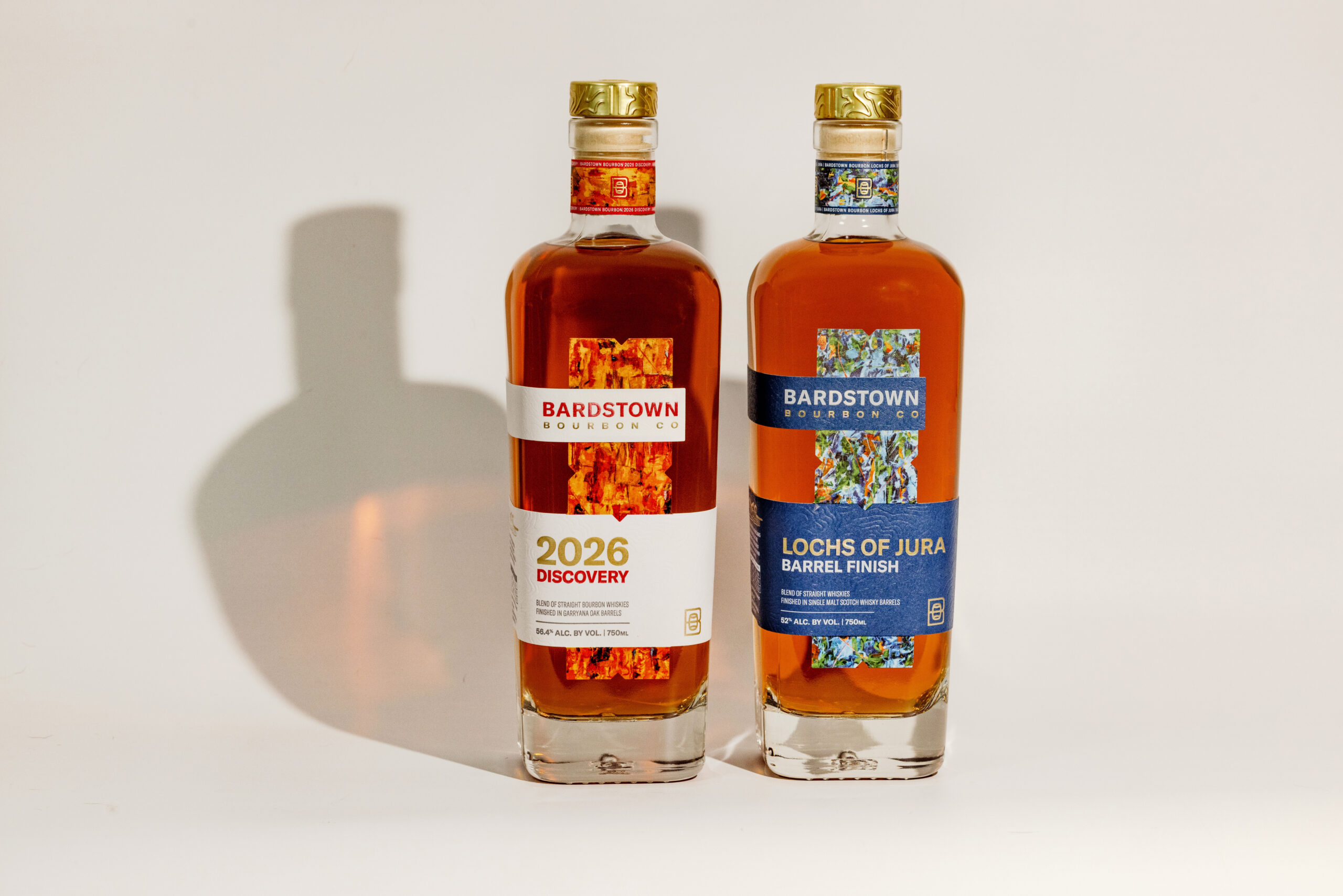
Bardstown Bourbon Company’s 2026 Fall Collection offers two very different examples of that philosophy in action. For 2026 Discovery, the question was how our blending team could take an already exceptional blend of mature bourbon somewhere new. For Lochs of Jura Barrel Finish, the question took us much farther: what could extraordinary casks sourced from a remote Scottish island contribute to American whiskey?
Pushing an Exceptional Blend Further
2026 Discovery began with 7, 10 and 11-year-old bourbons selected for their balance of mature fruit and oak.Rather than allowing the finishing wood to become the story, our blending team treated it as another component of the blend. Four months in custom-made Garryana oak barrels introduced additional spice, structure and sweetness while allowing the mature bourbon underneath to remain at the center of the experience. It is a showcase of what has always defined Discovery: using blending as a creative discipline.
Following the Cask to Jura
Lochs of Jura Barrel Finish required an entirely different kind of exploration.
Our team sourced ex-bourbon and ex-sherry casks from Scotland’s remote Isle of Jura, previously used to mature single malt Scotch whisky. A bespoke blend of straight bourbon and rye then spent 32 months inside them. Some of the sherry casks were too large for our traditional warehouse ricks, requiring the operations team to store them in the aisles and quite literally work around the experiment as the whiskey matured.
The patience and inconvenience paid off.
The casks contributed layers of fruit, malt, subtle smoke and maritime character while maintaining the structure of the American whiskey beneath. The finished whiskey went on to earn 99 points at the 2026 International Wine & Spirit Competition.
Different Paths Require Different Capabilities
These two releases did not come from a formula. They required mature whiskey inventory spanning multiple ages and profiles. They required access to unusual woods and casks. They required blending expertise, maturation knowledge, operational flexibility and, perhaps most importantly, the freedom to follow an idea even when the destination wasn’t entirely clear.
For the first time, that creative process also extends to the labels. Louisville artist Margaret Archambault experienced each finished whiskey and translated its aroma, flavor and texture into original works on canvas.
The result is two whiskeys that share very little in process but a great deal in philosophy. One path stayed close to home and explored what could be accomplished through blending and oak. The other stretched thousands of miles to a remote Scottish island.
At Lofted Spirits, having the capabilities to pursue both is the point.