

Every drop of finished bourbon carries the mark of a decision made years earlier, before the whiskey ever touched oak. That decision is barrel-entry proof, and it sets the color, texture, and taste long before a bottle reaches a shelf. Understanding how bourbon is aged comes down to three pillars working in tandem: the proof at which the distillate enters the barrel, the maturation within the wood, and the rickhouse environment. As a Kentucky production partner, we make these calls at scale every day, and we watch small shifts add up over years.
This blog includes a plain breakdown of barrel entry proof, the maturation process, the role of the rickhouse, and how we handle aging for our partners.
What Barrel Entry Proof Actually Means
Barrel entry proof is the alcohol strength of the distillate the moment we fill the barrel. We measure it in proof, where 100 proof equals 50 percent alcohol by volume. Federal law caps bourbon entry proof at 125 proof. No barrel can go in stronger than that and still count as bourbon.
Distillate comes off the still well above 125 proof, so we add water to bring it down before barreling. That dilution controls how the spirit meets the wood and protects the flavor we’re after. Across the industry, entry proof usually lands between 110 and 125 proof, with plenty of producers aiming low for a richer result.
How Entry Proof Shapes the Bourbon Flavor Profile
Oak holds two kinds of flavor. Water-soluble compounds like caramel and vanilla, and alcohol-soluble ones like tannins and wood spice. Entry proof decides which the spirit pulls more of. A lower entry proof carries more water, so it draws out richer, oakier, sweeter notes.
A higher entry proof extracts more alcohol-soluble compounds. That adds spice and structure, but it can also bring sharper tannins and less sweetness. Higher proof means we can add more water at bottling, which improves yield and lowers the cost per bottle. Over years in wood, the proof shifts as the barrel breathes, so the number going in rarely matches the number in the glass.
The Whiskey Maturation Process from Barrel to Bottle

Once the barrel is full, whiskey maturation starts. The spirit moves in and out of the charred oak, drawing out flavor and smoothing rough edges. The char layer works like a filter. Caramelized sugars in the wood give bourbon its color and much of its sweetness. Clear distillate turns amber over time.
Some liquid evaporates through the wood every year. We call that loss the angel’s share, and it concentrates the flavor in what remains. Seasonal temperature swings drive expansion and contraction, pushing the spirit deep into the wood in summer and drawing it back in winter. That cycle is the engine of how bourbon is aged.
Kentucky gives us hot summers and cold winters, and that range works the wood hard. The wide swings drive greater expansion and contraction each year, which accelerate maturation beyond what milder climates can achieve. A few Kentucky summers can build character that takes longer to develop in a cooler place.
Inside a Bourbon Rickhouse: Where Flavor Is Made
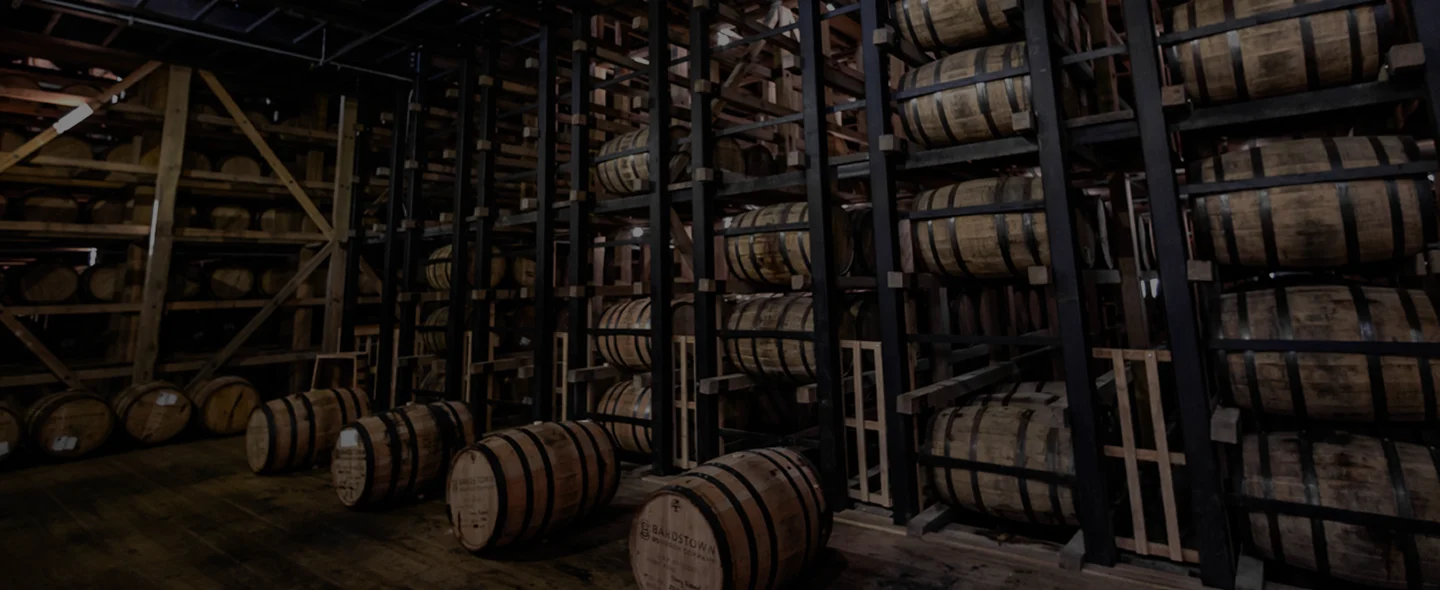
A bourbon rickhouse is the warehouse where barrels rest through aging. Barrels sit on wooden ricks, stacked floor to ceiling, sometimes many stories tall. One structure holds thousands of barrels, and its design shapes how each one ages.
Heat rises, so top floors run hotter than the bottom. Barrels up top mature faster and pull more oak. Lower barrels age slower and stay softer. Because of this, barrel placement sharply affects the outcome, even for barrels filled the same day from the same batch. To manage that spread, some producers rotate barrels between floors, which helps maintain consistency within a batch and evens out heat exposure.
How Entry Proof and the Rickhouse Work Together
Entry proof and rickhouse position are two levers we pull together. Pairing a set entry proof with a chosen floor lets us build a target flavor profile from the start. A lower entry proof placed on a hot upper floor gives us bold, sweet, oak-forward whiskey fast.
At bottling, we blend barrels from different floors and ages to hit a steady profile. That balances the intense upper-floor barrels against the gentler lower ones. Every choice carries trade-offs between yield, cost, and character. Matching those trade-offs to a brand’s goals is where technical control earns its keep.
How We Approach Aging and Production at Lofted Spirits
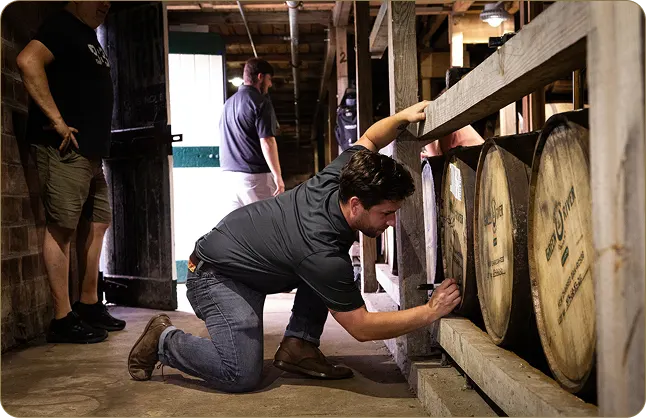
Aging at scale demands infrastructure, and we built for it. Our large-scale barrel storage and warehouse capacity allow us to handle significant volumes while tracking each barrel’s position and progress. That footprint gives partners room to grow without giving up maturation quality.
We design custom entry proof and maturation programs for the brands we work with through Lofted Custom Spirits, matching proof, floor placement, and aging timelines to specific flavor targets. Our barrel storage and logistics services keep every barrel accounted for from fill to bottle.
Our credibility rests on our portfolio. As the house behind owned brands including Bardstown Bourbon Company and Green River Distilling Co., we apply proven production standards to every partner program. We keep the process transparent and hold technical control from distillate to bottle, so brands know exactly what shapes their whiskey.
FAQs
What is the ideal barrel entry proof for bourbon?
There is no single ideal entry proof. The right choice depends on flavor goals and budget. The legal maximum is 125 proof, but many producers favor lower ranges near 110 to 115 proof for richer, sweeter oak extraction, while higher proofs improve yield.
Does a higher entry proof mean stronger whiskey?
Not always. Proof shifts during maturation as the barrel breathes in a rickhouse, and the final strength depends on that environment. Entry proof is the strength going into the barrel.
How does rickhouse placement change bourbon flavor?
Heat exposure varies by floor. Upper floors run hotter and produce bolder, oakier barrels faster. Lower floors age slower and stay softer.
Age Your Whiskey The Right Way
Entry proof sets the foundation, maturation builds the character, and the rickhouse directs how it all comes together. When those three work in sync, aging becomes a strategic advantage instead of a matter of chance. Every barrel choice we make reflects that discipline.
Ready to build a whiskey program with a team that controls every stage from distillate to bottle? Let’s talk about your goals.