

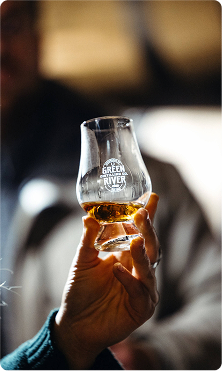
American whiskey keeps growing, and so does the list of brands entering the market without a distillery of their own. Building a facility takes years and serious capital. For a founder with a clear vision and limited funds, that puts full production out of reach. Contract distilling closes that gap. It gives new and scaling brands a path to quality whiskey and bourbon without having to run an operation themselves.
For a new brand, contract distilling makes real production possible from day one. For an established name, it adds capacity to move faster than in-house lines allow. We come at this from Kentucky roots and an end-to-end view, pulling distilling, bottling, barrel storage, and logistics under one roof.
This blog covers what contract distilling means, how the process works, private-label options, when the model fits, the trade-offs, and how to pick the right partner.
What Contract Distilling Actually Means
Contract distilling is a setup where a production partner makes whiskey for a brand. You own the recipe and the label. We handle the distilling, aging, and bottling. The finished product belongs to you and is made to your specifications.
That differs from owning a distillery, where you carry the buildings, equipment, licensing, staff, and the daily grind of operations. With contract distilling, that infrastructure already exists. Sourced whiskey fits here as well, giving brands aged liquid ready to blend and bottle, rather than waiting years for a fresh run to mature.
More American whiskey brands lean on this model now because it lowers the barrier to entry and shortens time to market. Founders get to focus on brand and sales while an experienced partner runs the production side.
How the Contract Distilling Process Works

Every program starts with planning. We work through the mash bill, recipe direction, target volume, and timeline before anything touches the still. This stage sets the flavor profile and the run size.
From there, distillation, barreling, and aging happen under one roof. Keeping those steps together holds quality steady and cuts down on coordination headaches. Barrel storage and logistics remain in play the whole time, since aging whiskey requires proper warehousing and inventory tracking. Once the liquid hits maturity, production moves from the line to the finished bottle, ready for your market.
Some brands want to build an original mash bill from scratch. That creates a signature profile that belongs to you alone, though it asks for patience while the whiskey ages. Others pick sourced whiskey to reach shelves sooner, launching with quality aged liquid while a custom program matures in the background. Blending lets brands combine both, shaping a profile that stands out.
Private Label Whiskey and Custom Bottling Explained
Private label whiskey covers the full path from liquid to finished product carrying your name. A private-label bourbon distillery partner handles production and packaging, so you can focus on positioning and growth.
Custom whiskey bottling covers bottle selection, labeling, closures, and packaging built around your brand identity. Through it all, brands retain creative control over recipe direction, look, and story while we manage the technical work. The result is a bottle that reflects your vision and meets standards you can trust.
Contract distilling fits a handful of situations. It works for founders launching a brand without capital for a facility. It suits established brands that need to scale faster than in-house capacity allows. It helps teams test a new expression before committing to a major investment, which takes the risk out of unproven ideas. And it frees up time and attention for sales, distribution, and demand, rather than for plant operations.
Benefits and Trade-Offs to Weigh
The upside is direct. Lower upfront costs and reduced operational risk enable brands to enter the market sooner. You gain access to expertise and infrastructure that would take years to build on your own.
There are trade-offs worth facing honestly. Minimum production runs and lead times shape how much you produce and when. Aging whiskey cannot be rushed. Brands also weigh the flexibility of contract production against the long-term goal of owning a facility. Knowing these realities early helps you plan a program that fits your growth stage.
How to Choose the Right Contract Distilling Partner
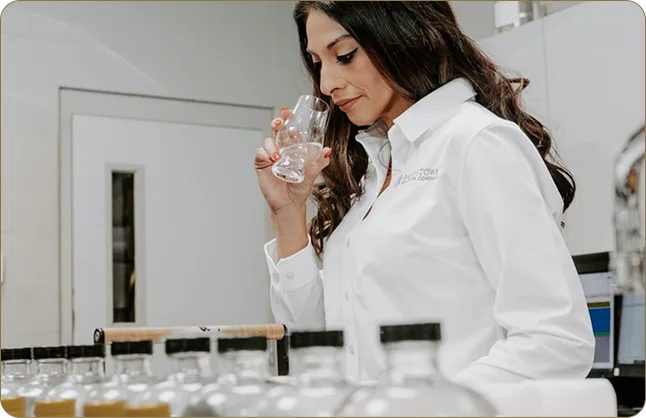
Start by verifying production scale and bottling capacity. A partner should match your current volume and leave room for growth. Look for transparency around sourcing and mash bills, since that clarity builds trust and protects your brand story.
Weigh the range of services on offer, from grain to bottling to logistics. A full-service partner cuts the number of vendors you have to coordinate. Then review the track record with emerging and established brands, such as our work with Bardstown Bourbon Company and Green River Distilling Co., as well as the programs supported through Lofted Custom Spirits.
FAQs
What is the minimum production run for contract distilling?
Run sizes vary by project and program. Smaller test batches suit brands validating a new expression, while larger runs fit established brands scaling for wider distribution.
Can we create our own whiskey or bourbon recipe?
Yes. You can build a custom mash bill from scratch for a signature profile, or start with sourced whiskey to reach the market sooner.
How long does whiskey and bourbon aging take?
Timelines depend on the style, mash bill, barrel, and warehouse conditions. Bourbon labeled straight requires a minimum aging period under federal rules, while flavor development continues over the years.
What’s the difference between contract distilling and private label whiskey?
Contract distilling centers on producing the liquid to your specifications. Private-label whiskey extends to bottling, labeling, and branding.
What We Bring as a Kentucky Production Partner
We operate as both a house of whiskey brands and a large-scale production arm, which gives us a full view of what brands need. Our capabilities cover large-scale distilling, bottling, and barrel storage, backed by growing infrastructure across our facilities.
We bring innovation and transparency to every stage, from recipe development to custom whiskey bottling. We support brands from concept to shelf, whether you are launching a first expression or scaling a proven one. That end-to-end approach is what makes contract distilling with us feel strategic instead of transactional.
Ready to build something that is extraordinary? Contact us.